The New
Passport
Economy
Why The Best Investment You'll Ever Make Is A Plane Ticket
By WakaWaka Doctor
(Medical doctor & travel, global mobility advocate)

Why The Best Investment You'll Ever Make Is A Plane Ticket
By WakaWaka Doctor
(Medical doctor & travel, global mobility advocate)
The departure board flickers. Gate numbers change. A toddler cries somewhere behind me. Someone rushes past with a passport clutched in one hand and a coffee in the other, hoping they've misread the final boarding call.
Airports are fascinating places.
For some, they're the beginning of a holiday. For others, the end of one. Some people are flying home to familiar faces. Others are leaving everything they've ever known behind with nothing but two suitcases and a dream.
I've always believed airports reveal something profound about humanity. They are one of the few places where the world's inequalities, ambitions, fears and possibilities all stand in the same queue.
Look closely and you'll see it.
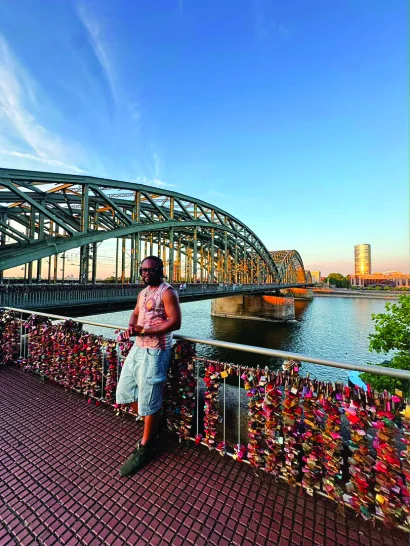
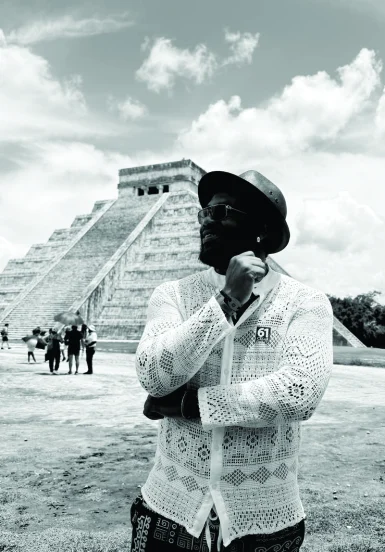
Different destinations. Different reasons. The same hope.
Perhaps that's why travel has never really been about movement. It's about transformation.
For decades, we treated travel as a reward, a luxury reserved for holidays, anniversaries or retirement. Today, something extraordinary is happening. Travel has become one of the most valuable forms of education available, yet it's one that rarely comes with a certificate.
Welcome to what I like to call the new passport economy.
In this economy, a passport is no longer simply a document that allows you to cross borders. It's an invitation to collect perspectives. For me the truth is, the world's most valuable currency isn't always money. Sometimes it's exposure. Exposure changes conversations. It changes confidence and it changes ambition.
Most importantly, it changes what you believe is possible. You cannot unknow what you've seen.
The first time you board a train that arrives exactly when the timetable says it will, you begin questioning what efficiency really looks like. Walk through cities where cycling is as normal as driving and your understanding of urban life shifts. Sit in a café where people linger over conversations instead of racing against the clock, and you begin to wonder whether productivity has quietly stolen the art of living. Travel has a remarkable habit of introducing us to better questions rather than easy answers.
It teaches us that our normal is not the normal. Every country is, in many ways, a different answer to the same question: "How should people live?" Some societies answer with community. Others answer with innovation. Some prioritise tradition, others celebrate reinvention. None are perfect. All are worth learning from.
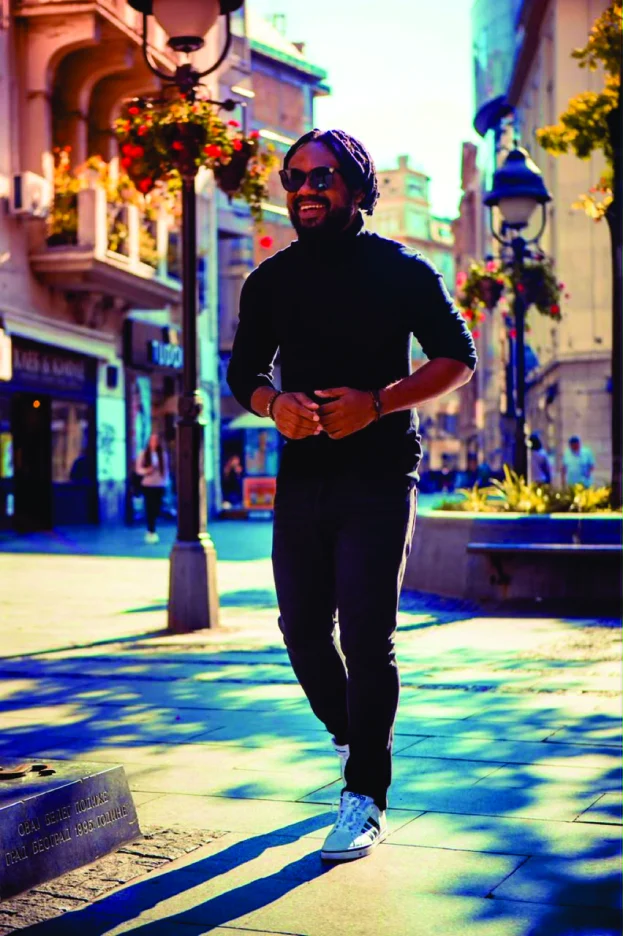
One of the greatest misconceptions about travel is that it exists to help us escape reality. I've found the opposite to be true. The best journeys don't help us escape life. They help us understand it.
Some of the most memorable moments I've experienced abroad weren't standing beneath famous landmarks or checking attractions off an itinerary. They happened far from tourist brochures. Sharing breakfast with strangers who became friends. Being hopelessly lost and discovering a neighbourhood I would never have intentionally visited. Accepting food whose name I couldn't pronounce. Watching children laugh in a language I didn't understand but somehow completely recognised.
Joy, it turns out, doesn't require subtitles. Neither does kindness.
In an age where social media often rewards appearances over experiences, travel has also become strangely performative. We've all seen it. Someone spends twenty minutes taking photographs of a sunset they never actually watched. Another visits a famous monument only long enough to prove they were there. Some travellers collect destinations the way children collect stickers.
Country number 30.
Country number 50.
Country number 80.
As though geography alone measures growth. It doesn't. I've met people who have travelled to five countries and returned transformed. I've met others who have visited fifty and learned almost nothing beyond where to find the nearest luxury hotel. Travel isn't measured in kilometres. It's measured in curiosity. The question isn't how far you've gone. It's how deeply you've arrived.
This is where the passport economy becomes truly interesting. Increasingly, exposure is becoming a competitive advantage. Businesses expand because someone understood another market. Ideas become companies because someone noticed a problem while travelling.
Careers begin because an ordinary conversation in another country opened an unexpected door. Creativity flourishes because inspiration rarely respects borders. The world's most innovative people often have one thing in common. They've learned to see familiar problems through unfamiliar eyes. That's what travel does. It interrupts certainty. It quietly dismantles stereotypes. It reminds us that intelligence wears many accents. That success speaks many languages. That brilliance is evenly distributed—even when opportunity isn't.
Perhaps this is why every meaningful journey leaves us slightly different from the person who boarded the plane. Travel teaches patience when flights are delayed. Humility when you realise your language isn't the centre of the world. Resilience when things don't go according to plan. Adaptability when Google Maps gives up before you do. And gratitude—for home, for difference, and for the extraordinary privilege of seeing more of this planet than yesterday.
The older I become, the less interested I am in asking people, "How many countries have you visited?" I'm far more interested in asking, "What did they teach you?" Because every destination has lessons hidden beneath its skyline.
No country has all the answers but every country has at least one. The most successful travellers aren't the ones who simply collect passport stamps. They're the ones who collect wisdom. Maybe that's the real luxury. Not business class. Not five-star hotels. Not infinity pools overlooking turquoise oceans.
Perspective. The ability to see your own life through a wider lens. To realise that your postcode should never become your destiny. To understand that borders exist on maps more often than they should exist in our minds.
When the history of this generation is written, I don't think we'll remember travel as something people did for leisure. We'll remember it as one of the defining forces that reshaped careers, businesses, friendships and identities. We'll remember it as the great teacher that never needed a classroom. Because every boarding pass carries the possibility of becoming something much more valuable than a ticket. It can become the first page of a new chapter.
The greatest souvenir you'll ever bring home won't be found in an airport gift shop. It will be the quieter, wiser, more curious version of yourself who steps off the return flight. And in a world changing faster than ever before, that may be the most valuable investment any of us can make.