
HEAD ABOVE WATER
How Swimming Aids Thought Processing
By Angel Afemikhe
hat if you could submerge yourself in water, close your eyes, and stop your thoughts for 60 seconds without drowning?
This is what would happen: you'd feel absolute quiet, except for the soft splashes brushing against your skin. You'd also feel your thoughts slowing down, as though your heart would stop beating at any minute. Only it won't stop, but your anxiety will. Swimming, over the years, has been misinterpreted by many of us as a simple sport where you merely sway both arms and legs, but studies have proven it to be much more than that.
It is an act that creates a space for clear thinking; an exercise that regulates both the body and the mind. One swimmer states that, "in swimming, every stroke and every breath counts. It's the ultimate lesson in persistence." This is because to swim is to measure your breath until it keeps your whole body relaxed. In this way, it facilitates your cognitive system, allowing for a steady and uninterrupted flow of ideas.
So, how exactly does swimming aid your thinking? The answer is simpler than it seems. We all know how important blood and oxygen are to our bodies, and since they are needed for constant regulation, continuous movement in water helps circulate both to the brain.
What the body needs most is proper circulation, and swimming provides it with ease. Swimming is like a socket that connects the mind to the body. When you've had a hard day and need to clear your head, putting your body in motion in the water gives your thoughts a chance to flow easily. Gradually, you begin to feel as though a mental cluster has been untangled simply by engaging with the calmness of the water.
Furthermore, swimming is one of the most peaceful exercises you can engage in, as there are little to no distractions. You won't be scrolling through your phone or reading a book in the water. Swimming creates an intimate environment between you and your thoughts; one where silence is not empty, but restorative. The arm strokes, breathing patterns, and distinctive movements are not just survival skills, but techniques that help you ease into the bodily process and remain present in the moment.
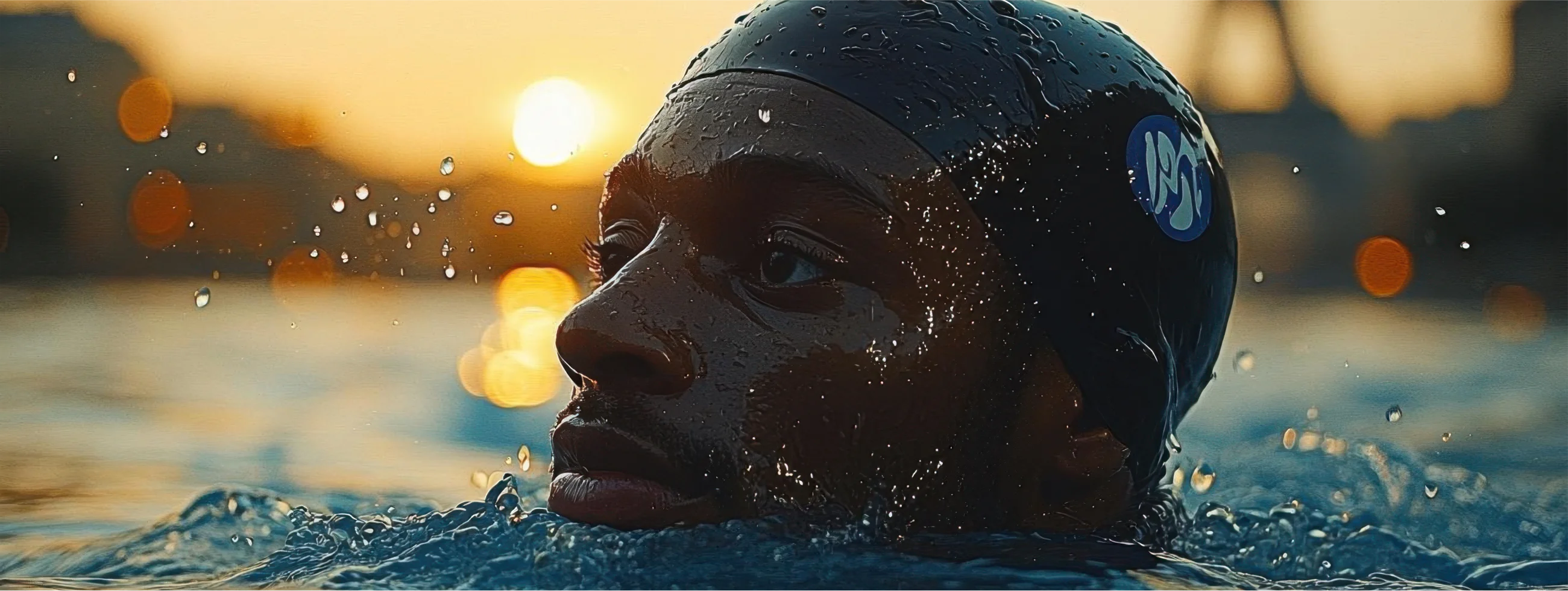
And then, there is that quiet moment when your head comes above the water. A moment of mental clarity. By then, your thoughts have loosened and your body has found rhythm. With swimming, you gain two things: a rejuvenated body, and a calm mind ready to take on the next task. So whenever your thoughts feel heavy and hard to carry, step into the water and find the quiet strength it takes to rise, breathe, and think again.