Tales From The World's Longest Train Route
By Tomisin Juliet Faoye
he bulk of travel, as every good traveller knows, is made up of all the little moments between getting from one place to the next. Arriving at the planned destination is satisfying, but it is the chance of the unknown, the unforeseeable adventures getting there, that make a trip truly memorable, and lead to the best stories to take home. Journeying through the Trans-Siberian railway is one week-long adventure of the in-between; in-between towns, in-between comfort and compromise, in-between two major continents.
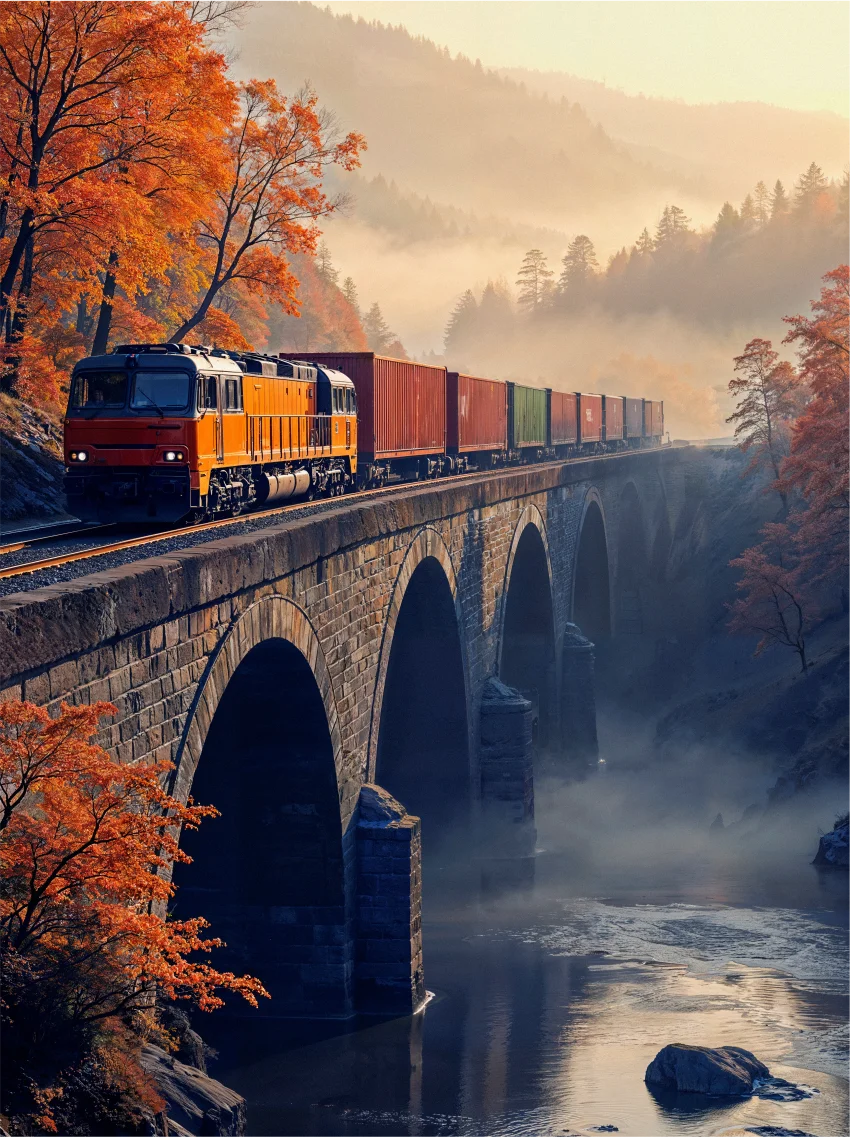
Looking at a map of the Trans-Siberian railway, there is a near-complete lateral slice across the major Northern Hemisphere landmass of Europe and Asia. The route, spanning over 9,288 kilometers, spills across 8 time zones and transverses two continents. All of that in just seven days. The Trans-Siberian railway is the world's longest railway line, with passengers embarking in Moscow and ending in Vladivostok, both Russian cities but separated by the equivalent distance of Lagos to Cape Town and (nearly) back! Moscow, the Russian capital, sits at the European end of the country, while Vladivostok lies in the far east, bordering China and North Korea and looks across the Pacific Ocean, toward Japan.
The creation of this rail-travel masterpiece began in 1891, under instruction of Tsar Alexander III, and took roughly 25 years to complete. At the time of the railway's completion, an end-to-end trip took close to six weeks. The original, first-class carriages were paragons of imperial luxury — marble-tiled bathroom floors, a music room with a grand piano, a library, servings of caviar. But for the majority of travellers, who rode third class, the experience of travel on the railway line was one of necessity, not pleasure; they would have been crammed in uncomfortable carriages, packed to the brim with impatient bodies.
Over the 100 plus years of its existence, modern and historic travelers aboard the Trans-Siberian train have documented the extraordinary, unrepeatable experiences which it affords, including David Bowie during the height of the Cold War, and a three-part BBC special following British icon, Joanna Lumley, taking the ride years later.
'Whatever drama is being enacted', writes Paul Theroux in his account of his train journeys across continents, The Great Railway Bazaar, 'in this moving bedroom is heightened by the landscape passing the window: